SPECIAL ADDENDUM (IAN WALKER RELATED) - added 4th August, 2011Hello there.
Nice of you to drop in. Enjoy the stay - however brief it may be.
I'm second guessing that you've found this six year old post because you've been looking on the net for information about the late, great British journalist Ian Walker.
First of all, I'd like to congratulate you on your excellent taste in journalism. However, I know, I understand, there's not a lot out there about him or his work on the net.
Fret no more. Click on this link for a selection of Ian Walker's journalism from the pages of New Society. Also, if you scroll down to the comments on this post, you'll find further information about Ian Walker's life and work.
Enjoy.
Stuart of From Despair To Where has thrown me a
book survey meme. I've been looking longingly ay this survey doing the rounds in blogland for a few days now, but no bugger up to now had the good grace to think of me when passing it on. I'll remember you bastards when I'm Commissar of Catchcart.
1. Total number of books I own.
Tricky one. 'cos they are in at least three different locations. I would guess at about 1200. Like everyone else that has done this meme, I do try and do a cull every once in a while. That usually means that unless it is a novel that I especially like, I will pass on a lot of my fiction onto the nearest charity shop. Strange that I think it is more acceptable to get rid of fiction over factual books - especially when I consider that it is particular novels and collections of short stories that have had the greater impact on me down the years, but I guess I rationalise matters by thinking that I will always be more likely to find those books again on my travels, either in libraries or secondhand bookshops. I can't say the same for some of the more obscure lefty stuff.
I also used to collect political pamphlets and journals, and I have about 500 knocking about but I'm not obsessive about these things, and now that so many of these texts are online, I don't feel the need to get my grubby little mitts on the hard copies.
2. Last book I bought, and why.
John Sutherland's 'Who Betrays Elizabeth Bennet? Further Puzzles In Classic Fiction'; 'A Spiel Among Us: Glasgow People Writing'; & 'Edinburgh Review: Tom Leonard Number' (Has an interview with Mario Vargas Llosa in it.). Why these three books? Three ex-library books for a pound from my local library. God bless the non-reading public of Fife.
3. Last book I read.
I recently relocated a load of books from
there to
here, so I have been indulging in the pastime of re-reading old favourites. One of those books being 'The Other Britain', edited by Paul Barker; published in 1982, it is a collection of articles that originally appeared in the now defunct New Society magazine. A wonderful, wonderful book that I have read many, many times over the years. Featuring such inspiring writers as Jeremy Seabrook, Angela Carter and the late - and truly great - Ian Walker, as the blurb on the back of the books says: "This collection of social observations and reportage is written by some of the best of the younger generation of descriptive writers. All are associated with the magazine New Society in whose pages the essays first appeared and whose 20th anniversary is marked by the publication of this book. Together they document the way we live now, not just describing the 'problems' but celebrating the strength and variety of Britain and its people."
4. Five books that mean a lot to me.
Like Stuart, I probably covered a lot of this when I did this
survey. I would in all probability include both Bulgakov and Gaitens in my top five, but rather than repeat myself, I will list five different books that mean a hell of a lot to me.
i)
The Monument: the Story of the Socialist Party of Great Britain by
Robert BarltropStuart's already listed this - Christ, it was me that sold him his copy. He could have namechecked me ;-) - but there is no denying that reading this book had a formative influence in my becoming a member of the SPGB. It's a strange thing to admit, because in no way could it be described as a polemical or analytical work that can somehow prompt a person into becoming a revolutionary socialist. However, I do think that it contributed to me looking at the SPGB in a light in which I thought that this was an organisation I could be a part of. Barltrop is a wonderful writer - his
biography of Jack London is also recommended - and though I've since learnt the strange history of the manuscript, and how it was the case that he was settling a few scores in the book along the way, I would have no hesitation in recommending the book to anyone wanting to get some sense of what the SPGB is, and the people who made it. Just bear in mind the subheading of the book; it's a 'story' rather than 'history' of the SPGB.
I love Walker's writings. As mentioned above, I discovered them via The Other Britain, and then spent many an afternoon going through old back issues of the New Society in college libraries when I should have been
studying. I admired Walker's writings so much that years ago, when I had some spare money, I paid an arm and a leg for a load of old copies of seventies radical magazine, The Leveller, because I knew that he had been one of its star writers. I'd read about
Zoo Station, his account of his time spent living in the divided Berlin in the early eighties, but I had never been able to get a hold of a copy until I found it on sale for fifty pence in Watford Market about ten years ago. Just the opening paragraph gives some flavour of his writing style:
"The maroon-and-caramel train ran all day back and forth between the systems, capitalism-communism-capitalism-communism the rhythm of the iron wheels lent itself to any number of repitive lyrics. I looked out the dirty window. A girl was waving. I waved back. There was something about trains that caused children to wave spontaneously at the passing faces, some idea that the strangers at the window were bound for adventure or romance, some idea about stories starting in trains."
Sadly, I couldn't find much on the net about either the book or Walker himself, but the link provided above - and the contrasting views about the book - give some sense of the book and Walker's style of writing. I think it was Walker's humanism - to borrow a term from Orwell, his "essential decency" - that resulted in Walker impacting as much as he did on me when I first read him.
Sadly he died much too young, and tragically just when he was about to reach a much wider audience. I remember that when Roy Greenslade took over as editor of the Daily Mirror in the late eighties or early nineties he hired both Walker and the late John Diamond as columnists. Walker died within weeks of penning his first column, and for reasons I now forget, Greenslade was removed as editor of the Mirror soon after. Shame that, I think that the Mirror would have been much the better paper for writers such as Walker, Diamond and Greenslade. I did have the cutting of Walker's obituary that appeared in the Mirror somewhere amongst my papers, and if I ever come across it again I will be sure to scan it in and place it on the blog. He is a writer that should be remembered by more people.
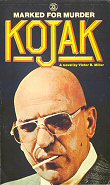
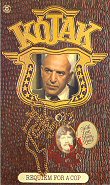
Cue violins - we didn't have a lot of books in the house when I was growing up. I seem to remember a sideboard where in amongst the liquors, the ornaments and the LPs, there was a wee section given over to books. In amongst the handful of books, there was a biography of Elvis, a couple of Time Life books on Cowboys and Indians and a couple of
Kojak novels that were obviously tie-ins with the TV series. I got into Orwell big time around about 1985/86, 'cos a lot of his books were republished after 1984 but, aside from Orwell, the number of novels I read before the age of 16 I could count on the fingers of one hand.
One of those five books I was fortunate enough to read was Heller's Catch-22. My sister's boyfriend of the time had bought it for her, and I ended up picking it up after she read it. I can't claim to have fully understood Helller's biting satire first time round, but re-reading it two times since I've come to enjoy the novel more at each time of reading. I'm always a bit wary when someone describes a book as 'anarchic', but in this case the label fits.
I can still remember laughing for ten minutes solid after reading a passage in the book that featured Doc Daneka. I mean real tears of laughter, where I ended up aching with pain. I don't usually laugh for that length of time unless it is one of my own jokes, so it must have been a good one.
I would recommend all of Carr's books, but I have a real soft spot for this novella because of its final few pages. I can't remember being affected so much by any other piece of writing before or since. The film adaptation isn't bad but it isn't a patch on the book itself.
An excellent primer on the majority of the currents that make up, in the late John Crump's words, "the thin red line of revolutionary socialism". Betraying its Eurocentric roots, there is no chapter on De Leonism or the Revolutionary Unionism of the IWW but, for all that, a very readable and accessible introduction to ideas that have hitherto been consigned to the footnote of history.
(Apparently it's for sale on Amazon for a minimum of $78 - the Monument not much cheaper. I think I have finally found my pension plan.)
5. Tag five more people
Fellow SPGBer, Piers, at
Border Fever. It will be nice to meet you at the G8 thingymijig; Kevin the
Scottish Patient. If he can't do this meme, he should hang his laptop in shame; Harry at
Harry's Place. Not because I think he will get round to doing it but because he may mention me in passing un his blog -
"An ultra-leftist is harrassing me. Call the cops." - and I could do with the hits.
Glaikit Feartie as my random act of blogging kindness. No idea who they are, but I love the name of the blog; and, as an innovation, I'm going to offer a guest blog to Julian from the
World in Common group. The bugger did have a blog, and it looked like a goodie but he came up to the notorious:
'Fourth post writers block syndrome'. Myself and others who have been through the same process tried to advise him on how best to get through the pain barrier:
"Just link to a Steve Bell cartoon for chrissake." -
"Lift a quote from Oscar Wilde, and call it your 'Thought for Today'." "Do a sub-Hornbyesque post where you recount in great detail your feelings when Terry Fenwick scored that goal for QPR in the 1982 FA Cup final." But to no avail, he's happier in his procrastination by reading - and understanding, the freak - John Hollway's writings; listening to sub Sub Pop records; and propping up bars in West London, where for a white wine and some pork scratchings, he will regale you with a stream of consciousness on where he was when Terry Fenwick scored that goal for QPR in the 1982 FA Cup final.
The blog floor is open to you, Julian.