Thursday, June 16, 2005

In the Latest Issue of Organise

Found via a comrade's post to the World Socialist Forum, details of obituaries for John Crump and Chris Pallis/Maurice Brinton -page 25 - in the latest issue of Organise, the journal of the Anarchist Federation.
Interesting to read in the Pallis/Brinton's obituary that Bob Pennington broke for a time from Trotskyism in the early sixties. From reading Sean MaxShachtmanna* obituary of Pennington in an old issue of the Workers' Liberty magazine, I can't remember any indication of Pennington erring from the true path. Not like Sean to forget stuff like that. Also fascinating to read the rumoured anaecdote that Rudi Dutschke wouldn't trust anyone other than Pallis/Brinton to remove the bullet from his head when he was operated on in Britain.
I haven't had a read through the latest issue of Organise yet - hate reading PDF journals on the net at the best of times - but it is interesting to note the the AF can actually bring themselves to mention the SPGB in print for a change. Is this a thaw of sorts? Have the two leading members of the AF finally had a change of heart? Do the two leading members of the AF have hearts? Sorry - excuse my descent into sectariana.
* Hat tip to the late Jim Higgins for that great joke.

Wednesday, June 15, 2005

"Wearing Badges Is Not Enough . . . "

Good post from Bill at Reasons To Be Impossible. In fact, Bill has been in good form in recent weeks, and back to blogging regularly, on such subjects as George Bernard Shaw and Ireland; George Bernard Shaw and the tyranny of a Standing Army (admit it Bill, you picked up a cheap secondhand copy of Viking's Portable Bernard Shaw.); and even a couple of film reviews thrown in for good measure.
If you want to read an SPGBer blogger who actually blogs about politics, then you can't go far wrong on bookmarking him. I can't guarantee that he has as good a taste in music as me, though.

"Yep, for a player billed as having all the finishing skills of a toddler with a plate of broccoli . . . "

James Richardson has his own unique take on the season just past in Serie A in today's Guardian.
I don't know how I'm going to survive without my regular dose of footie. The managers of top clubs keep banging on these days about the need for big squads; if that's the case, they should be playing competitive games twelve months a year.

Tuesday, June 14, 2005

Double Booked

SPECIAL ADDENDUM (IAN WALKER RELATED) - added 4th August, 2011

Hello there.

Nice of you to drop in. Enjoy the stay - however brief it may be.

I'm second guessing that you've found this six year old post because you've been looking on the net for information about the late, great British journalist Ian Walker.

First of all, I'd like to congratulate you on your excellent taste in journalism. However, I know, I understand, there's not a lot out there about him or his work on the net.

Fret no more. Click on this link for a selection of Ian Walker's journalism from the pages of New Society. Also, if you scroll down to the comments on this post, you'll find further information about Ian Walker's life and work.

Enjoy.

Stuart of From Despair To Where has thrown me a book survey meme. I've been looking longingly ay this survey doing the rounds in blogland for a few days now, but no bugger up to now had the good grace to think of me when passing it on. I'll remember you bastards when I'm Commissar of Catchcart.

1. Total number of books I own.
Tricky one. 'cos they are in at least three different locations. I would guess at about 1200. Like everyone else that has done this meme, I do try and do a cull every once in a while. That usually means that unless it is a novel that I especially like, I will pass on a lot of my fiction onto the nearest charity shop. Strange that I think it is more acceptable to get rid of fiction over factual books - especially when I consider that it is particular novels and collections of short stories that have had the greater impact on me down the years, but I guess I rationalise matters by thinking that I will always be more likely to find those books again on my travels, either in libraries or secondhand bookshops. I can't say the same for some of the more obscure lefty stuff.

I also used to collect political pamphlets and journals, and I have about 500 knocking about but I'm not obsessive about these things, and now that so many of these texts are online, I don't feel the need to get my grubby little mitts on the hard copies.


2. Last book I bought, and why.
John Sutherland's 'Who Betrays Elizabeth Bennet? Further Puzzles In Classic Fiction'; 'A Spiel Among Us: Glasgow People Writing'; & 'Edinburgh Review: Tom Leonard Number' (Has an interview with Mario Vargas Llosa in it.). Why these three books? Three ex-library books for a pound from my local library. God bless the non-reading public of Fife.


3. Last book I read.
I recently relocated a load of books from there to here, so I have been indulging in the pastime of re-reading old favourites. One of those books being 'The Other Britain', edited by Paul Barker; published in 1982, it is a collection of articles that originally appeared in the now defunct New Society magazine. A wonderful, wonderful book that I have read many, many times over the years. Featuring such inspiring writers as Jeremy Seabrook, Angela Carter and the late - and truly great - Ian Walker, as the blurb on the back of the books says: "This collection of social observations and reportage is written by some of the best of the younger generation of descriptive writers. All are associated with the magazine New Society in whose pages the essays first appeared and whose 20th anniversary is marked by the publication of this book. Together they document the way we live now, not just describing the 'problems' but celebrating the strength and variety of Britain and its people."


4. Five books that mean a lot to me.
Like Stuart, I probably covered a lot of this when I did this survey. I would in all probability include both Bulgakov and Gaitens in my top five, but rather than repeat myself, I will list five different books that mean a hell of a lot to me.

i) The Monument: the Story of the Socialist Party of Great Britain by Robert Barltrop
Stuart's already listed this - Christ, it was me that sold him his copy. He could have namechecked me ;-) - but there is no denying that reading this book had a formative influence in my becoming a member of the SPGB. It's a strange thing to admit, because in no way could it be described as a polemical or analytical work that can somehow prompt a person into becoming a revolutionary socialist. However, I do think that it contributed to me looking at the SPGB in a light in which I thought that this was an organisation I could be a part of. Barltrop is a wonderful writer - his biography of Jack London is also recommended - and though I've since learnt the strange history of the manuscript, and how it was the case that he was settling a few scores in the book along the way, I would have no hesitation in recommending the book to anyone wanting to get some sense of what the SPGB is, and the people who made it. Just bear in mind the subheading of the book; it's a 'story' rather than 'history' of the SPGB.

ii) The Zoo Station by Ian Walker
I love Walker's writings. As mentioned above, I discovered them via The Other Britain, and then spent many an afternoon going through old back issues of the New Society in college libraries when I should have been studying. I admired Walker's writings so much that years ago, when I had some spare money, I paid an arm and a leg for a load of old copies of seventies radical magazine, The Leveller, because I knew that he had been one of its star writers. I'd read about Zoo Station, his account of his time spent living in the divided Berlin in the early eighties, but I had never been able to get a hold of a copy until I found it on sale for fifty pence in Watford Market about ten years ago. Just the opening paragraph gives some flavour of his writing style:
"The maroon-and-caramel train ran all day back and forth between the systems, capitalism-communism-capitalism-communism the rhythm of the iron wheels lent itself to any number of repitive lyrics. I looked out the dirty window. A girl was waving. I waved back. There was something about trains that caused children to wave spontaneously at the passing faces, some idea that the strangers at the window were bound for adventure or romance, some idea about stories starting in trains."
Sadly, I couldn't find much on the net about either the book or Walker himself, but the link provided above - and the contrasting views about the book - give some sense of the book and Walker's style of writing. I think it was Walker's humanism - to borrow a term from Orwell, his "essential decency" - that resulted in Walker impacting as much as he did on me when I first read him.

Sadly he died much too young, and tragically just when he was about to reach a much wider audience. I remember that when Roy Greenslade took over as editor of the Daily Mirror in the late eighties or early nineties he hired both Walker and the late John Diamond as columnists. Walker died within weeks of penning his first column, and for reasons I now forget, Greenslade was removed as editor of the Mirror soon after. Shame that, I think that the Mirror would have been much the better paper for writers such as Walker, Diamond and Greenslade. I did have the cutting of Walker's obituary that appeared in the Mirror somewhere amongst my papers, and if I ever come across it again I will be sure to scan it in and place it on the blog. He is a writer that should be remembered by more people.

iii) Catch-22 by Jospeh Heller
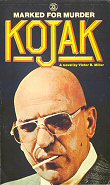
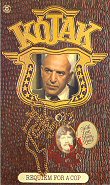
Cue violins - we didn't have a lot of books in the house when I was growing up. I seem to remember a sideboard where in amongst the liquors, the ornaments and the LPs, there was a wee section given over to books. In amongst the handful of books, there was a biography of Elvis, a couple of Time Life books on Cowboys and Indians and a couple of Kojak novels that were obviously tie-ins with the TV series. I got into Orwell big time around about 1985/86, 'cos a lot of his books were republished after 1984 but, aside from Orwell, the number of novels I read before the age of 16 I could count on the fingers of one hand.

One of those five books I was fortunate enough to read was Heller's Catch-22. My sister's boyfriend of the time had bought it for her, and I ended up picking it up after she read it. I can't claim to have fully understood Helller's biting satire first time round, but re-reading it two times since I've come to enjoy the novel more at each time of reading. I'm always a bit wary when someone describes a book as 'anarchic', but in this case the label fits.

I can still remember laughing for ten minutes solid after reading a passage in the book that featured Doc Daneka. I mean real tears of laughter, where I ended up aching with pain. I don't usually laugh for that length of time unless it is one of my own jokes, so it must have been a good one.

I would recommend all of Carr's books, but I have a real soft spot for this novella because of its final few pages. I can't remember being affected so much by any other piece of writing before or since. The film adaptation isn't bad but it isn't a patch on the book itself.

An excellent primer on the majority of the currents that make up, in the late John Crump's words, "the thin red line of revolutionary socialism". Betraying its Eurocentric roots, there is no chapter on De Leonism or the Revolutionary Unionism of the IWW but, for all that, a very readable and accessible introduction to ideas that have hitherto been consigned to the footnote of history.
(Apparently it's for sale on Amazon for a minimum of $78 - the Monument not much cheaper. I think I have finally found my pension plan.)


5. Tag five more people
Fellow SPGBer, Piers, at Border Fever. It will be nice to meet you at the G8 thingymijig; Kevin the Scottish Patient. If he can't do this meme, he should hang his laptop in shame; Harry at Harry's Place. Not because I think he will get round to doing it but because he may mention me in passing un his blog - "An ultra-leftist is harrassing me. Call the cops." - and I could do with the hits. Glaikit Feartie as my random act of blogging kindness. No idea who they are, but I love the name of the blog; and, as an innovation, I'm going to offer a guest blog to Julian from the World in Common group. The bugger did have a blog, and it looked like a goodie but he came up to the notorious: 'Fourth post writers block syndrome'. Myself and others who have been through the same process tried to advise him on how best to get through the pain barrier: "Just link to a Steve Bell cartoon for chrissake." - "Lift a quote from Oscar Wilde, and call it your 'Thought for Today'." "Do a sub-Hornbyesque post where you recount in great detail your feelings when Terry Fenwick scored that goal for QPR in the 1982 FA Cup final." But to no avail, he's happier in his procrastination by reading - and understanding, the freak - John Hollway's writings; listening to sub Sub Pop records; and propping up bars in West London, where for a white wine and some pork scratchings, he will regale you with a stream of consciousness on where he was when Terry Fenwick scored that goal for QPR in the 1982 FA Cup final.

The blog floor is open to you, Julian.

ADDICTED . . . . .

. . . once again to Big Brother. Yeah, yeah, yeah, I know, I'm a sad bastard.
Some people use the summer months to watch the cricket; others use it to top up on their tans in Cuba, but for me summer has to be about watching paint dry televised and asking myself, and others around me, such philosophical questions as: "Who's this year's Jade?; What possessed me to once think that Dermot O'Leary seemed like a decent bloke?; Where do they find this shower of spoilt brat, self-seeking wankers?; & If I could only batter one of them senseless, which one would it be?*"
First night of this year's Big Brother, and watching the thirteen wannabes in search of an equity card enter the house, I thought I would be able to escape its grips this time round. I wasn't interested - and I said as much. They all seemed like too much of a muchness, and I was even able to stop myself from watching any of the first week when, by all accounts, Makosi was brilliant, when part of her task to avoid nomination for eviction was to wind up as many housemates as possible. (She succeeded.)
However, as the days have passed, slowly but surely I've been getting sucked in to the point now that I know that I will have to watch it regularly for the next four or five weeks or so. (It's the same pattern every year. I'm interested until it is down to the last four or five, and then I can't be bothered until the final night itself.) I've already got my favourites - Maxwell, Roberto and Makosi - the one's I love to hate, - Derek, Science, Craig and Derek again, and the ones who if they were sitting in front of me right now, I wouldn't recognise - Vanessa, Anthony and the one that keeps telling the diary room she is so much more intelligent than everyone else in the house.
I'm sure the plastic toff Derek debated with the old Islington Branch of the Socialist Party way back in the eighties, and I'm sure he's the same bloke who was written about in the old Scallywag magazine in connection with Portillo, when the latter was still reading Adam Smith Institute pamphlets in the closet. A bloke who revels in his friends nickname of him of Golly, every time I watch Derek do his pre-prepared, but supposed off the cuff state of the nation impromptu speeches whilst sitting on the couch, I suddenly remember that I'm Old Labour enough to know that, bottom line, I still effin' despise any choob wearing blue rosetted underpants. Long may that continue.
Oh, and Maxwell to win this year's Big Brother.
*Derek with one of Science's severed limbs.

Monday, June 13, 2005

Quote of the Day

"The only way to guard against throwing your vote away is to vote for the party that stands for what you stand for. To vote for something that you don't want in order to avoid something else that you don't is to do worse than throw your vote away".
Eugene Debs, writing in the pages of The Call, circa 1908.

Sunday, June 12, 2005

Roux Boy

"If there is an equivalent in the English game now, it might be Worksop Town - about the same level, about the same size. And if Worksop win the Premiership-FA Cup double by 2050 and play in the Champions League, you'll have an idea of what Guy Roux has achieved."
Lovely wee article from today's Observer about the redoubtable Guy Roux. For what he has achieved with Auxerre over the last forty odd years is difficult to comprehend from a British perspective. As the article itself indicates, the nearest British equivalent is Cloughie but, for all that, you can't really make a comparison between the two. Derby and Notts Forest are much bigger clubs, though the story of Roux putting his hand on the bonnet of players cars to gauge whether or not they have been out on the booze sounds so much like the sort of thing that Cloughie would have got Peter Taylor to do in their heyday.

Do The Bump

Bill Casey - Part Two
Reproduction of Bill Casey's obituary with its mention of the old IWW songs reminded me that Casey himself was well known for writing the odd Wobbly song. The most famous of which is 'Bump Me Into Parliament'; the lyrics of which are reproduced below.
The site which reproduces the lyrics mistakenly refer to Casey as a one time member of the IWW, but as Bill Clarke's obituary indicates, for a variety of reasons, this is understandable mistake.
Bump me into Parliament
Come listen all kind friends of mine
I want to move a motion
To make an Eldorado here
I've got a bonza notion
Chorus
Bump me into parliament
Bounce me any way at all
Bang me into parliament
On next election day
Some very wealthy friends I know
Declare I am most clever
While some can talk for an hour or so
Why I can talk for ever
I know the Arbitration Act
As a sailor knows his riggins
So if you want a small advance
I'll talk to Justice Higgins
I've read my bible ten times through
And Jesus justifies me
The man who does not vote for me
By Christ he crucifies me
Oh yes I am a Labor man
And believe in revolution
The quickest way to bring it on
Is talking constitution
I think the worker and the boss
Should keep their present stations
So I will surely pass a bill
'Industrial Relations'
So bump them into parliament
Bounce them any way at all
Bung them into parliament
Don't let the Court decay

Saturday, June 11, 2005

Pages From Our History

Discovered the following on an old floppy disc recently. Originally published in the Western Socialist, the old journal of the World Socialist Party of the United States, in the late forties (exact date to follow),it's an interesting piece for the insight and background history it gives on an early pioneer of what is now the World Socialist Party of Australia, companion party of the World Socialist Movement. I find it especially interesting because it goes some way in correcting the old myth that members of the SPGB/WSM are not, and never have been active trade unionists, 'cos as the caricature goes: "If it doesn't involve the abolition of the wages system, you lot aren't interested."

BILL CASEY – SOCIALIST PIONEER

Your many readers will regret to hear of the loss of a pioneer of the Socialist Movement in Australia. There have been many pioneers in the Socialist Movement and the Old World has been rich in them; but down her in Australia, we have not been so fortunate. On the 19th. Oct. last, Bill Casey died in the Brisbane General Hospital.

Bill Casey, who hailed from Manchester, arrived in Australia some years before World War I. Almost immediately he became involved in industrial activities and participated in some of the most historical disputes recorded in this country. Ever on the move, he spent much of his time in Victoria, New South Wales and Queensland. During the First War he played a leading part in Queensland industrial affairs and was active in the strikes on the Cane fields and the Meat Industry. On more than one occasion he had to run the gauntlet of Labor Party Police, who spurred on by Labor Governments, dealt ruthlessly with those who championed the workers cause.

Job conscious Union officials and Big Businessmen on one occasion urged his deportation from the local township because of his union activities. When war-time Labor Prime Minister, Wm, Morris Hughes, tried to enforce conscription in 1916, anyone who opposed the move was branded "traitor", "Seditionist" or "I.W.W." But the anti-conscription campaign grew and the Labor Party split on the issue. The chief opponents were the "Wobblies" (I.W.W.) and their supporters. Casey, who had experienced the persecution of the I.W.W. in America, threw himself into the fight and became one of the most active and enthusiastic members of the Anti-Conscription Army. When we point out that the anti-conscription campaign left an indelible mark on the history of Australia, it will be easier to understand the significance of our reference to in this obituary.

In those days, much of the I.W.W. propaganda took the form of parodying of popular songs. To the tunes I.W.W. rhymsters would fit words ridiculing and satirising their opponents. Most meetings opened up with "Doxology"


"Praise Boss when morning work-bells chime,

Praise him for bits of over-time,

Praise him whose wars we love to fight,

Praise Him. Fat Leech and Parasite,

Oh Hell".

Meetings would be held up awaiting some subtle satire from Casey on the topic of the day. Couriers would run from the press, with literally red-hot jingles copies of which were passed round the audiences who lustily chorused the latest ditty, much to the discomfiture of "Law and Order". So popular did they become that friend and foe alike eagerly awaited the latest lampoon. Politicians shrunk from his satire but ever many of them, years afterwards, openly boasted acquaintanceship with "Bill Casey."

Back To Sea

Returning to sea, Casey played a big part in the Seaman’s strike of 1919. Just about this time he chummed up with Jack Temple who had recently arrived from Scotland after some years in Canada. Temple who had been active in the S. P. of Canada and had some connection with the S.P.G.B. played a big part in weaning Casey from the I.W.W. viewpoint. It may be pointed out that though Casey had leanings towards the "Wobblies" he was not a member although he was generally regarded as such.

Very soon Casey was expounding the S.P.G.B. position and as the Bolsheviks had just gained control in Russia, he lost no time in analysing the position. Probably aided by articles in the "S.S.", he became a caustic critic of the "Neo-Communists." He was delegate to represent the Seamen at an International T. U. Conference in Moscow. This, being one of the earliest "Missions to Moscow" was beset with difficulties all the way. Passports were forged; passages were "stowing away," Dutch, German, Polish and Russian frontiers had to be "hopped." Guides were often un-reliable; "go-betweens" were often in the pay of both sides; sometimes both had to be discarded until bona-fides were definitely established, a delicate job under the conditions then prevailing on the continent.

The ultimate arrival in Moscow, after much suffering, danger and perseverance, was hailed as a masterpiece of undercover work. Once at the gates of the Kremlin, most delegates became insufferable Bolshevik "Yes-men" whereas Casey and his co-delegate, Barney Kelly (another adherent of the S.P.G.B.) soberly tried to obtain a truthful estimate of the position. A few days sojourn in Moscow drew the following observations from Casey: "Production was in a straight-jacket, lethargy and indifference permeated the whole economy; the people were entirely lacking in a sense of time. Without the normal industrial development of production and some measure of buying and selling (war-communism was the order of the day) drift and indifference would gradually strangle the economy of the Soviet". These observations were greeted with disgust and dismay by the other delegates.

However, before they left Moscow, Lenin introduced his "New Economic Policy" which, in essence, provided for the very things which Casey opined was needed to stabilize the Russian economy. In contrast to their hostile reception of Casey’s prognostications, the "yes-men" cheered and echoed Lenin’s belated pronouncements.

Back in Australia, he submitted his report to Tom Walsh (then a leading Communist and foundation member of the Australian Communist Party), General President of the Australian Seamen’s Union. Walsh rejected the report and refused to publish it on the ground that it criticized the Bolsheviks and the Russian system. After spending some time in Melbourne, Casey proceeded to Sydney where he again crossed swords with Walsh who, carrying out the policy of the C.P. was endeavouring to get the Seamen to affiliate with the A.L.P. (Australian Labor Party) from which body the Seamen had seceded because of the anti-working class role of Labor Governments and politicians during the Seamen’s strike of 1917 and 1919.

With Jacob Johnson (Assist. Sec’y. Sydney Branch of the Seamen’s Union) and a handful of supporters, Casey pursued the fight against affiliation with the Labor Party. This fight continued up to 1925 when an un-expected walk-out of British Seamen, who left their ships tied up on the Australian coast, over-shadowed the affiliation dispute. Incidental to the British Seamen’s strike, both Walsh and Johnson were arrested, brought before a tribunal set up under special legislation, and sentenced to deportation from Australia. We knew, at the time, that Walsh wanted to be deported and was to be given a job in England with Havelock Wilson. Casey worked unceasingly to prevent the deportation. Those who were associated with Casey believe that his activities on behalf of Johnson were the most brilliant of his career. An appeal was made to the High Court of Australia. He marshalled facts, ferreted information, countered the sabotage of Government henchmen, suggested successful points of law, and finally his subtle optimism triumphed. Dr. Evatt, one of Johnson’s counsel, (now Attorney General and ex-president of U.N.O.) unstintedly praised Casey’s remarkable accomplishments. Many barristers have openly acknowledged him to be "the cleverest lay-man they ever met." The High Court held the Tribunal’s decision to deport to be ‘ultra vires’: Walsh and Johnson were released from the Naval prison on Garden Island where they had been held while awaiting deportation.

Following the release and the settlement of the British Seamen’s strike, the fight around affiliation with the Labor Party again assumed an important place in the Seamen’s Union. Finally Walsh’s move was defeated and he was deposed from his position as G. P. Later a high officer of the N.S.F.U. visited Australia and reported that Havelock Wilson had sent over £3,000 to help Walsh in the fight against Johnson and Casey. In justice to this official, let it be said that on hearing the facts of the case, he urged that no more money be sent from the English Seamen’s Union for this purpose.

During these periods, Casey consistently carried on Socialist propaganda. He debated almost every "leader" in the Communist Party. He represented the S.P. of A. in debates with the Henry George League, the Labor Party, the Communist Party, Currency Experts, and host of others. He trounced Individualist A.D. Kay who after losing his seat in Parliament and on the Meat Board, went to England to be given later, a job by Churchill during the last war. Casey conducted Speakers’ Classes, Economic classes, open air and indoor meetings for the S.P.A. Prior to the formation of the S.P.A., he, together with Moses Baritz struck terror into the hearts of the professional "revolutionaries" of the C. P.

The anecdotes about them would fill a book; Moses, bombastic, merciless, ruthlessly capable in expounding the Socialist position; Casey, puckish, simple, unsurpassed as a teacher of young fellows, flashing with satire and armed with a power of mental penetration that pierced the armor of the most hide-bound opponent of Socialism.

For many years he held official positions in the Seamen’s Union. He was Secretary of the Brisbane Branch when he died. For many years he found it difficult to get jobs on ships. Victimised, he battled around on scanty food, a few beers and a bit of tobacco. Long speels of unemployment meant more time for Socialist activities. He never went short while his friends had a few bob. His knowledge of philosophy, economics, political and industrial history was amazing and his uncanny ability to interpret industrial awards, surmount legal difficulties with regard to the Merchant Shipping Act, The Australian Navigation Act and the various Compensation Acts, redounded to the benefit of his ship-mates. He was known as the Seaman Philosopher. So much, and yet so little, of that side of his life.

Personally, Casey was the finest friend ever a man could wish for. His loyalty to friends and principles was universally acknowledged. A little, broad-shouldered fellow, quietly spoken, with impish grin, happy and humming some simple Old-country folk song. It was a pleasure to be in his company. Ever ready to quaff a pot. A lover of children, he was always the butt of their frolicking at some friend’s family gathering. He was popular in the truest sense of the word. His friendship never wavered.

Now Casey is gone and comrades, all over the world, will regret his passing. He died of cancer. The working class has lost a champion; the Socialist Party has lost a great pioneer in Australia. A fellow member of the S.P.A. gave the final address at his cremation; a sad task but a privileged one. Casey’s life was devoted to the life of establishing a new social order. For while the sands were running out, in a recent letter to the writer, after describing his suffering, he concluded thus:

"I wish nothing better to anybody than good health, except a better system in which to enjoy it".

The memory of Bill Casey will sustain us in our future struggles.

W. J. C. (Sydney)

UPDATE

As a comrade mentons in the comments box, the obituary is from the Nov-Dec 1949 issue of the Western Socialist. It also transpires that the obituary has been reproduced on the net here. I think I may be getting old, because in all probability it was me who sent it to them, or at least it was the obit that I had scanned in that had been sent on by someone who I had sent it to but, for the life of me, I can't remember.

Heroic Failure

I don't think Victor likes me. Maybe it's a Menshevik Internationalist versus *cough* Libertarian Bolshevik type feud, but what other explanation is there for him passing on to me a comic book superhero meme? What I know about comic books outside of the Broons and Oor Wullie annuals can be written on the back of a postage stamp, with enough space left over to also write out the lyrics of Tokyo Storm Warning in capital letters. No, wait up he mentions that I have excellent taste in music, so who am I to queston his motives in the circumstances?

Suped Up: The Post-Human Quiz

If you could have one superpower, what would it be and why? (Assume you also get baseline superhero enhancements like moderately increased strength, endurance and agility.)
Though I've never seen the film Mystery Men, I've always liked its central idea of crap superheroes so, in that spirit, my superpower would be to be able to knit, crochet and cross stitch at high speed. In my everyday dealings with super villians and their nefarious attempts to hold the world to ransom yet again, my ability to knit temporary holding cells at high speed after I disarm them with nothing more than a knitting needle, a sponge and a rusty spanner would come in really handy. If they ask me nicely, and show sufficient remorse, I could even throw in a couple of cross-stitched tea towels.

Which, if any, 'existing' superhero(es) do you fancy, and why?
 
Erm, I'm interpreting this question as which actresses who have played superheroes do I fancy? In that case, Catwoman 'cos she was played by Halle Berry and The Bowler 'cos she was played by Janeane Garofalo. Victor, too much information mate! ;-) 

Which, if any, 'existing' superhero(es) do you hate?
Hate is too strong a term, 'cos I'm left cold and indifferent to them all, but with a quick google search - erm, Googleman, what a great name for a superhero. No task is too difficult for Googleman. Faced with immediate danger from his adversaries, in a micro-second he can come up with 1,343,654 different pages for the keywords Keira + Knightley + naked, thus rendering the baddies immobolised and speechless whilst they (silver) surf the web, and thus buying me enough time whilst I knit and crotchet a temporary holding cell at high speed. I'll even throw in the tea towels for free. They will need them after surfing the web. - I'll opt for Conan the Barbarian. I never did buy into that fascist fuck. And before anyone pops up and says he isn't a superhero, all I can say is that he was in Marvel Comics. That is good(bad) enough for me for the purposes of this question.

OK, here's the tough one. What would your superhero name be? (No prefab porn-name formulas here, you have to make up the name you think you'd be proud to mask under.)
In keeping with my superpowers already listed, I'll go with The Crotcheteer. The name conjures up a picture of a superhero who is that blend of the practical, the menacing - if you were a baddy, would you want to be crotcheted? - but someone who is also in touch with his feminine side.

For extra credit: Is there an 'existing' superhero with whom you identify/whom you would like to be?
Sorry, I haven't seen the films but isn't Peter Parker/Spiderman the one who is always moaning and anxious? He seems to be someone who I could identify with. We could listen to Red House Painters albums together.

Pass it on. Three people please, and why they're the wind beneath your wings.
Ally at Perspective, 'cos from being a regular reader of his blog, I know he likes his comic book heroes; Morgan at Skookum Talk 'cos he doesn't blog regularly enough; and PB Ed at International Rooksbyism 'cos I think he is a bit of an aficionado when it comes to comic books as he used to tell me ad nauseum that the: "Socialist Standard reads like the fucking Beano." Or words to that effect.